Eye Level, Not Ceiling: Where Wall Lamps Actually Belong
Mount wall sconces 60 to 66 inches from the floor to the fixture center, bedside wall lamps 30 to 36 inches above the mattress, and space hallway sconces 6 to 8 feet apart, using warm 2700K LED bulbs of 300 to 500 lumens each.
Also in this series: spacing glass pendants over an island.
Every other fixture in the house is mounted to the ceiling and judged from below. A wall lamp is the one light you meet face to face, which is why an inch or two of mounting height changes it from flattering to glaring. The numbers below are the ones our customers ask about most, with the pieces they most often buy.

What height for every room?
| Location | Height to fixture center | Spacing / notes |
|---|---|---|
| Living room walls | 60 to 66 in from floor | Pairs flank fireplaces and consoles |
| Hallway | 60 to 66 in from floor | 6 to 8 ft apart, staggered with art |
| Bedside | 30 to 36 in above mattress top | About 48 to 55 in from floor, reachable from the pillow |
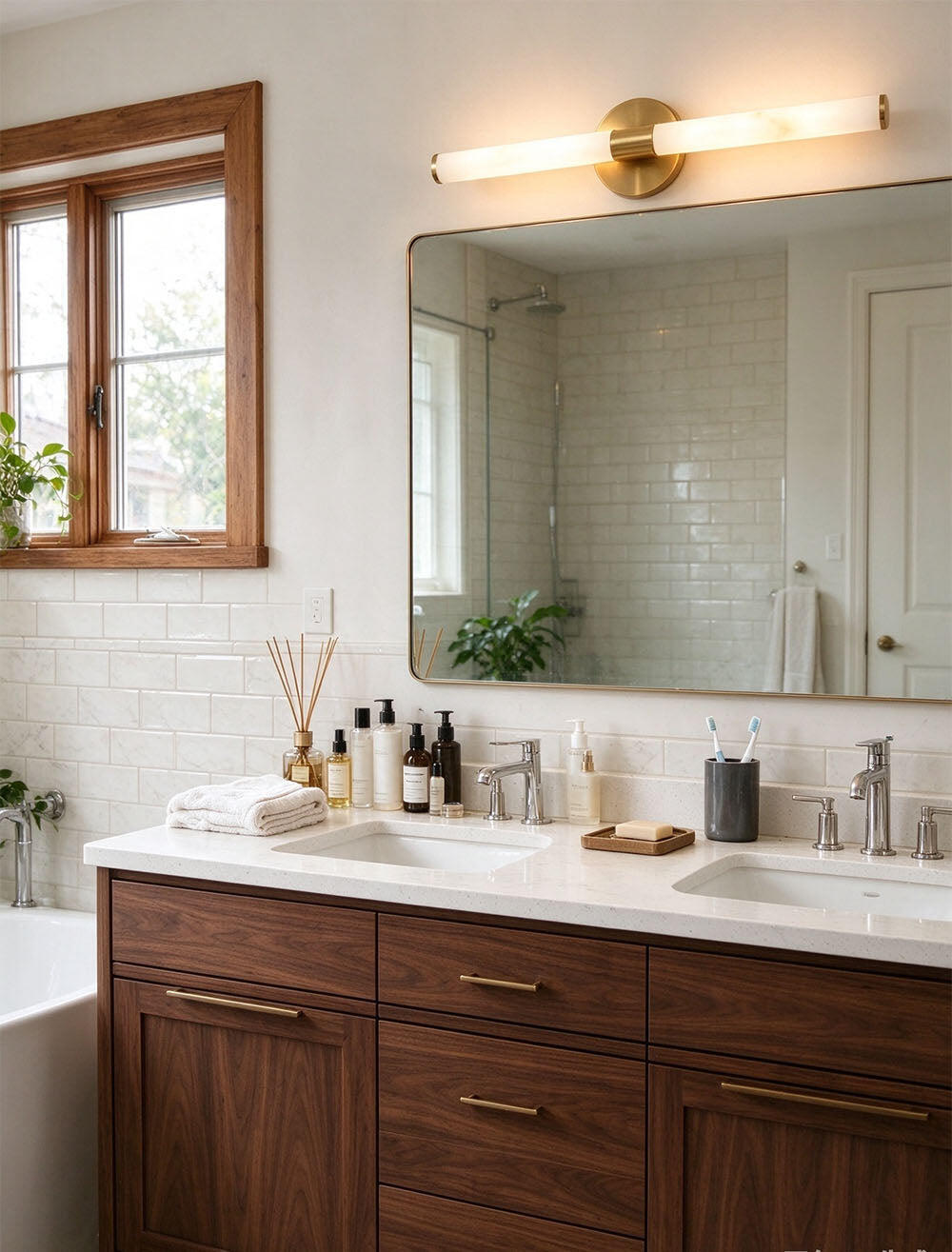
| Bathroom vanity | 65 in from floor, at eye level | 36 to 40 in apart, flanking the mirror |
| Stairway | 60 to 66 in above each tread line | One fixture per 6 to 8 ft of run |
| Ceilings 9 ft and up | 66 to 72 in from floor | Scale height with the wall |
Where do sconces go in living rooms and halls?
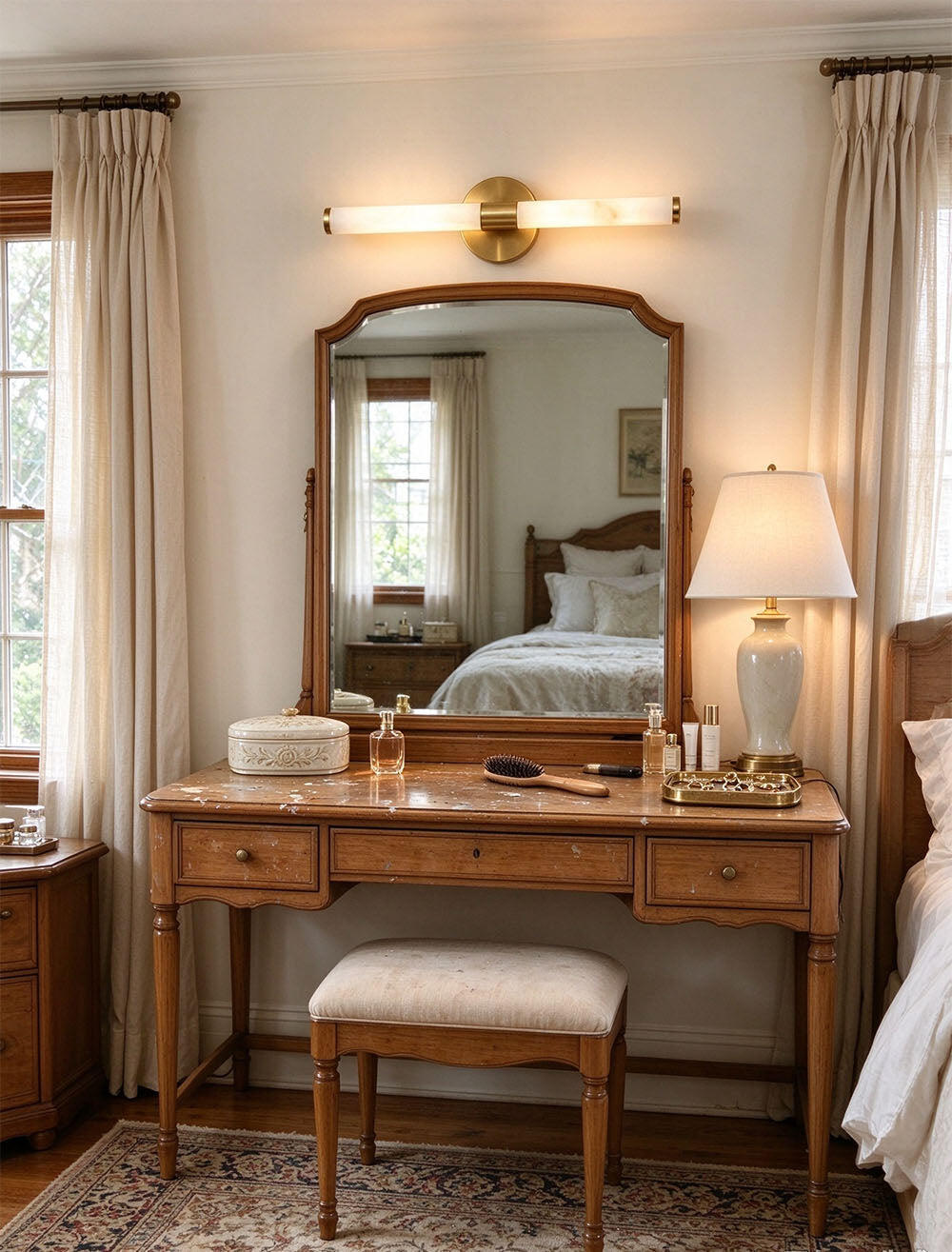
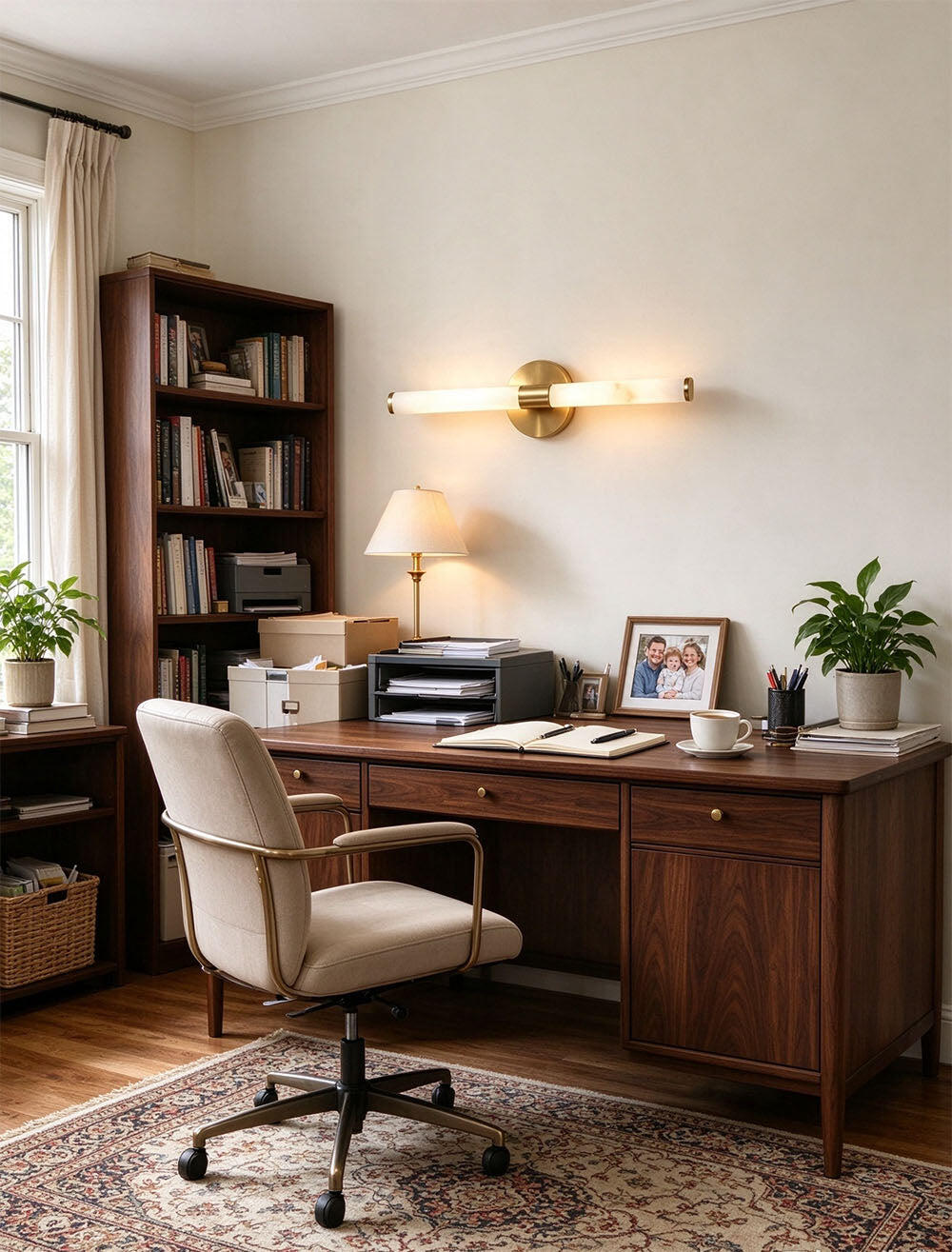
Center the fixture 60 to 66 inches from the floor, so the glowing face sits at eye level rather than above it. Flank a mirror, a fireplace or a hallway console in pairs, 6 to 8 feet apart along open walls. The Alvia alabaster wall light earns its place here: lit stone at eye level reads as architecture, and a pair on a dimmer replaces a hallway ceiling fixture entirely.

How high beside the bed?
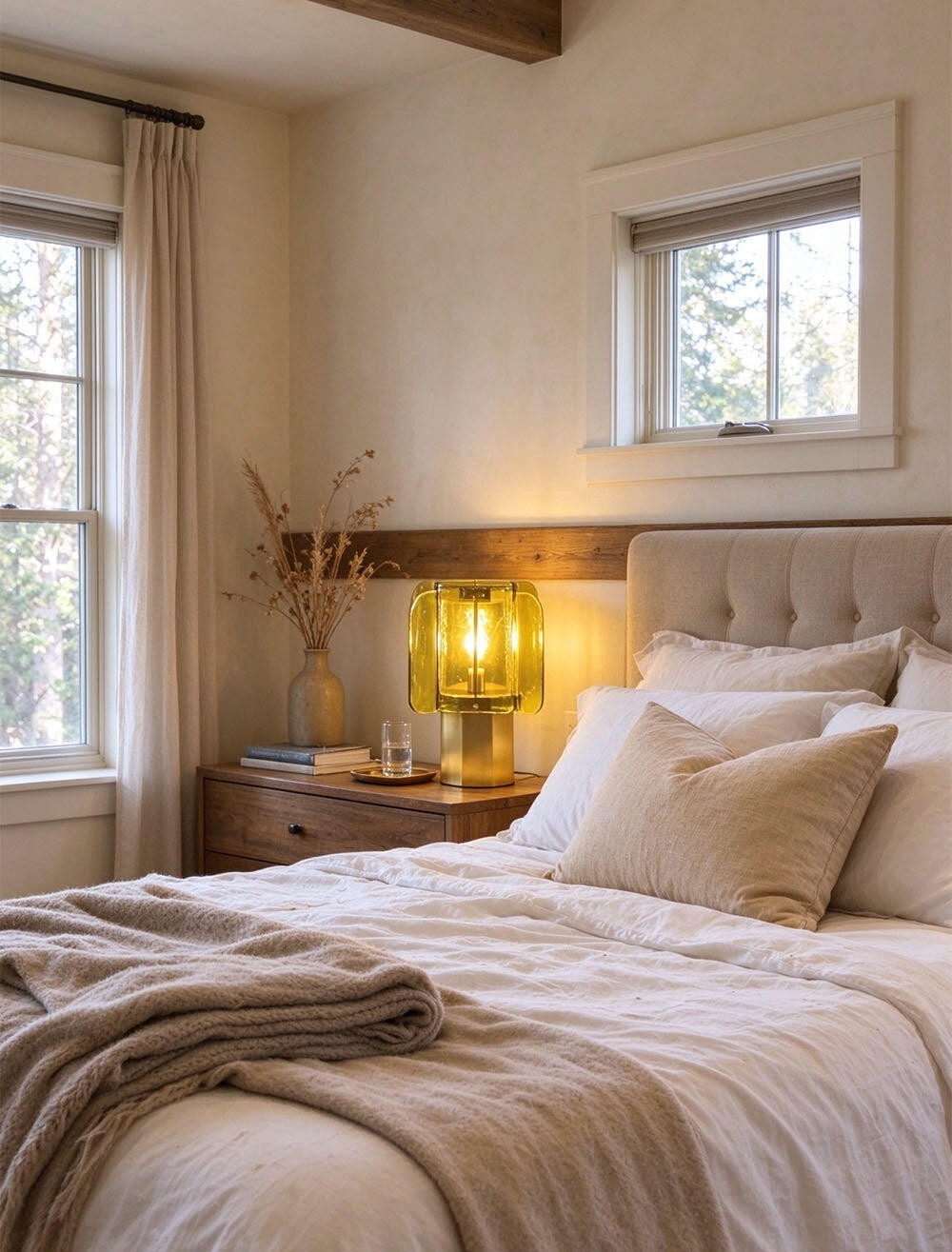
30 to 36 inches above the mattress top, within reach of a person on the pillow. The test is simple: you should be able to switch it off without sitting up. The Italian Simple wall lamp keeps the form quiet enough for both sides of the bed, and frees the entire nightstand.
What about vanities and bathrooms?
Flank the mirror at 36 to 40 inches apart, centered at 65 inches from the floor. Light coming from both sides at face height removes the under-eye shadows a ceiling fixture creates. The Ava brass and alabaster lamp handles humidity-adjacent placement; keep any fixture outside the direct splash zone unless it is rated for wet locations.

One rule that saves every installation
Tape a paper template of the fixture on the wall and live with it for a day before anyone drills. Walk past it, sit near it, lie on the bed. Wall lamps are the easiest fixtures to hang and the most annoying to move; the template costs nothing and catches almost every mistake.
Wall sconce mounting heights FAQ
What height should wall sconces be mounted?
60 to 66 inches from the floor to the fixture center in hallways and living spaces, which puts the glow at standing eye level. In rooms with 9 ft or taller ceilings, move up to 66 to 72 inches.
How high should bedside wall lamps be?
30 to 36 inches above the mattress top, roughly 48 to 55 inches from the floor, and within arm's reach of the pillow. A swing-arm or plug-in design saves the nightstand entirely.
How far apart should hallway sconces be?
6 to 8 feet apart along the wall, staggered between art or doorways. Alternating walls every other fixture stretches a short run of sconces down a long hallway.
Do wall lamps need an electrician?
Hardwired sconces need a wall junction box and are an electrician job unless one exists. Plug-in versions install with two screws and a cord cover and move with you. Most Samu wall lamps are offered hardwired; several are plug-in friendly.
What bulbs suit alabaster and plaster wall lamps?
Dimmable LED, E26 or G9 depending on the model, 2700K, CRI 90 or higher, 300 to 500 lumens per fixture. Stone and plaster diffusers spread the light, so several small sources beat one bright one.
One, Two or Three: Spacing Glass Pendants Over an Island
Fit for the Table: A Dining Chandelier Sizing Guide
Related Posts

Cherubs, Crystal and Candlelight: Four Fixtures for a Beautifully Haunted House

The 8-Foot Ceiling Problem: How to Get a Real Chandelier Without Losing Headroom

French Country vs. Parisian Chic: How to Choose the Right Chandelier for Every Room。

The Client Who Writes Back in Pencil

What 1,002 Orders Taught Us About Buying a Chandelier

Below Half Power: Bulbs, Dimmers and the Glow You Paid For

Three Dim Layers: Composing a Bedroom in Light