The Client Who Writes Back in Pencil
Most customers click a button. One of ours prints the invoice, checks our arithmetic in pencil, photographs the page, and emails it back. Over 28 months she has placed ten orders worth $38,854, corrected our totals at least once, rejected a wire we shipped, and commissioned pieces we don't even sell. This is what a long custom-lighting relationship actually looks like, from our side of the workbench.
We publish our order-book statistics in aggregate. This time we are zooming in on a single ledger line: one client in Connecticut, whom we'll call A. Everything below is real, from our own records; only her name is withheld.
The account, in numbers
| Measure | Value |
|---|---|
| Orders placed | 10 (May 2024 to July 2026) |
| Paid total | $38,854 |
| First order | $720, one fixture, ordinary web checkout |
| Largest order | $17,510, custom, one month later |
| Email conversations | 44 threads and counting |
| Orders that went imperfectly | 2 (one partial refund, one quote still unpaid) |
Act I: the $720 audition
The first order, in May 2024, was nothing special: a single lamp, standard checkout, no conversation. We didn't know it was an audition. Before the tracking number had gone quiet, an email arrived asking whether every bulb we ship could be 2700K or warmer, “warm light, not white”. We asked if she perhaps meant 3000K. She did not. Rule one of this account was set on day one, by her.
Act II: the pencil
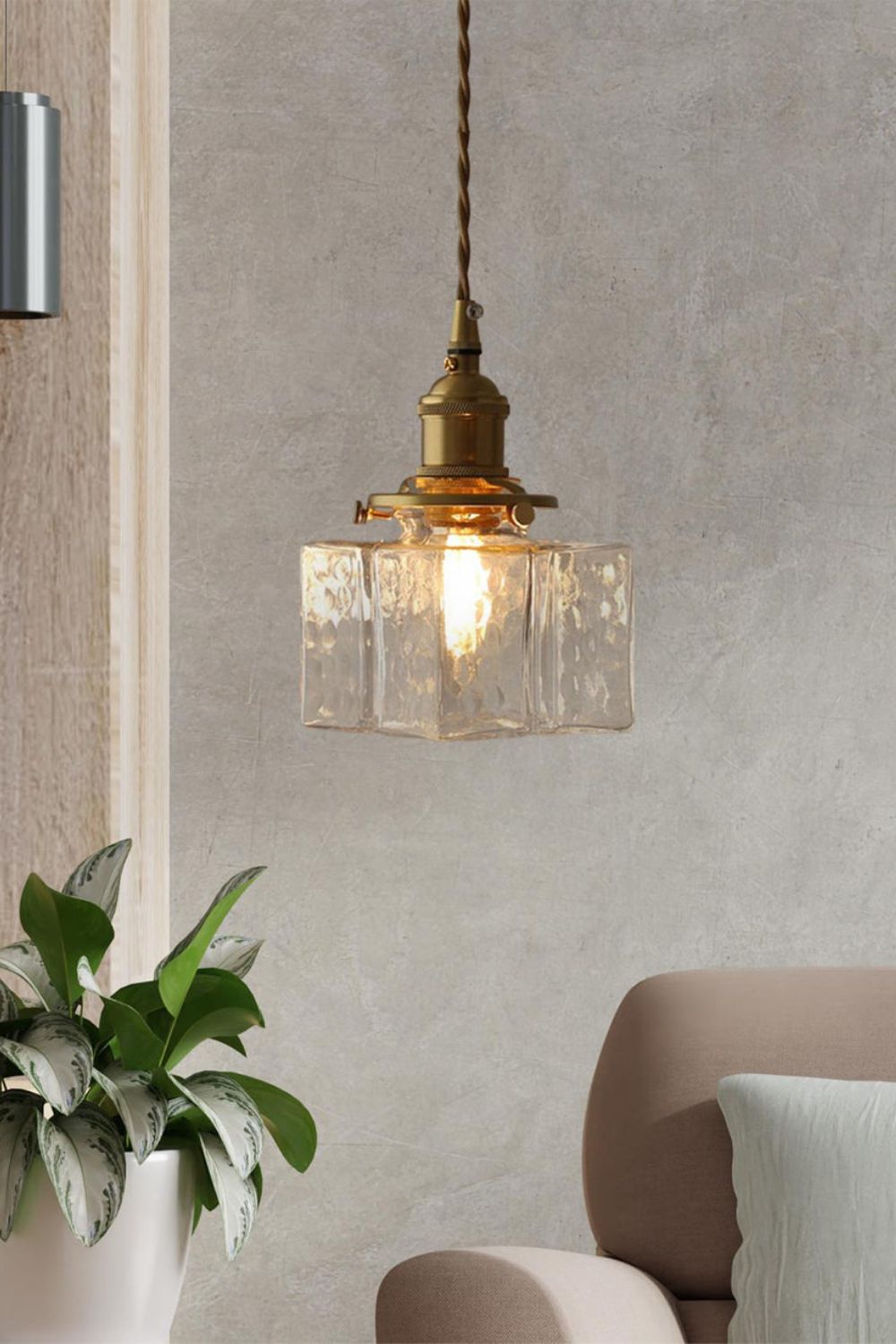
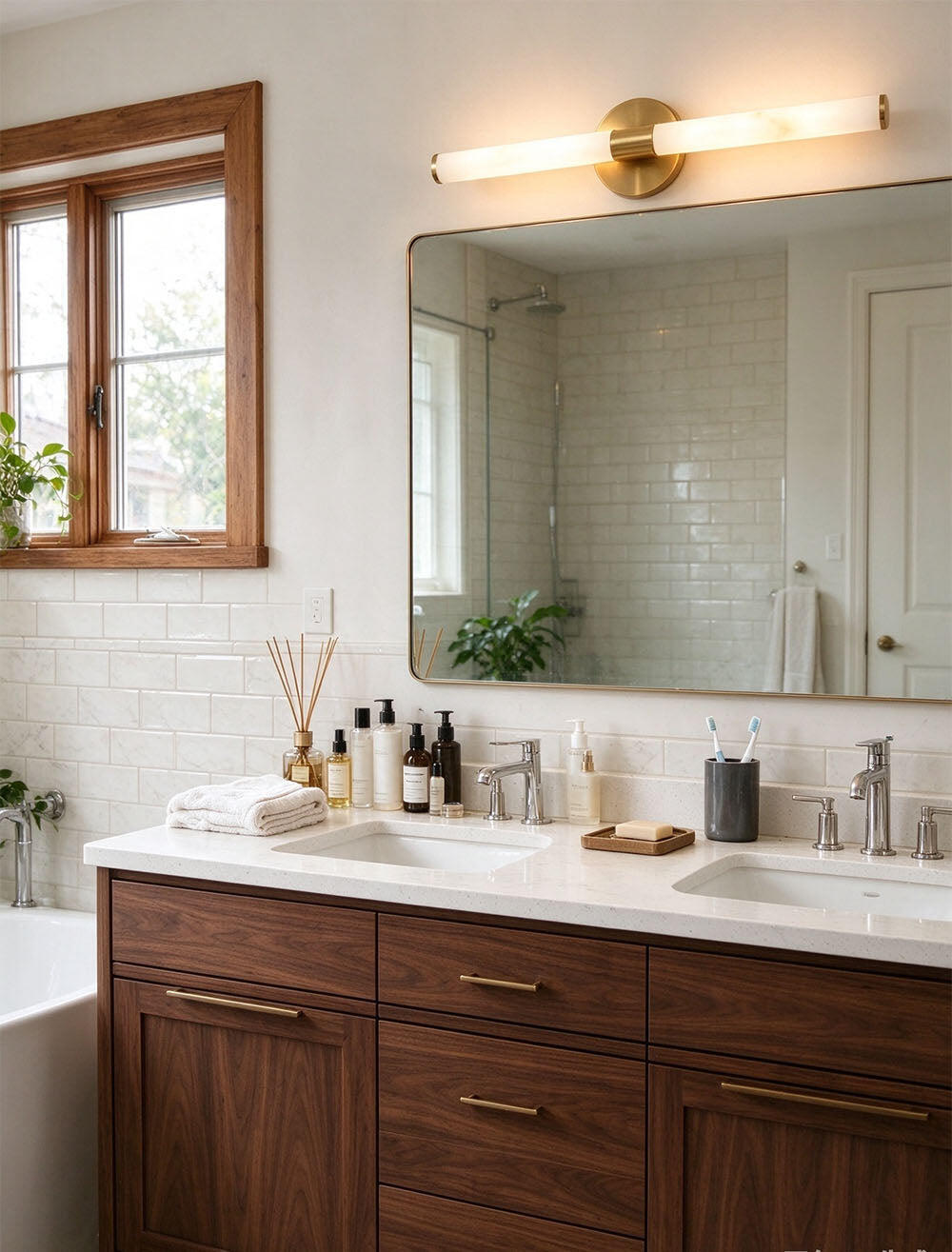
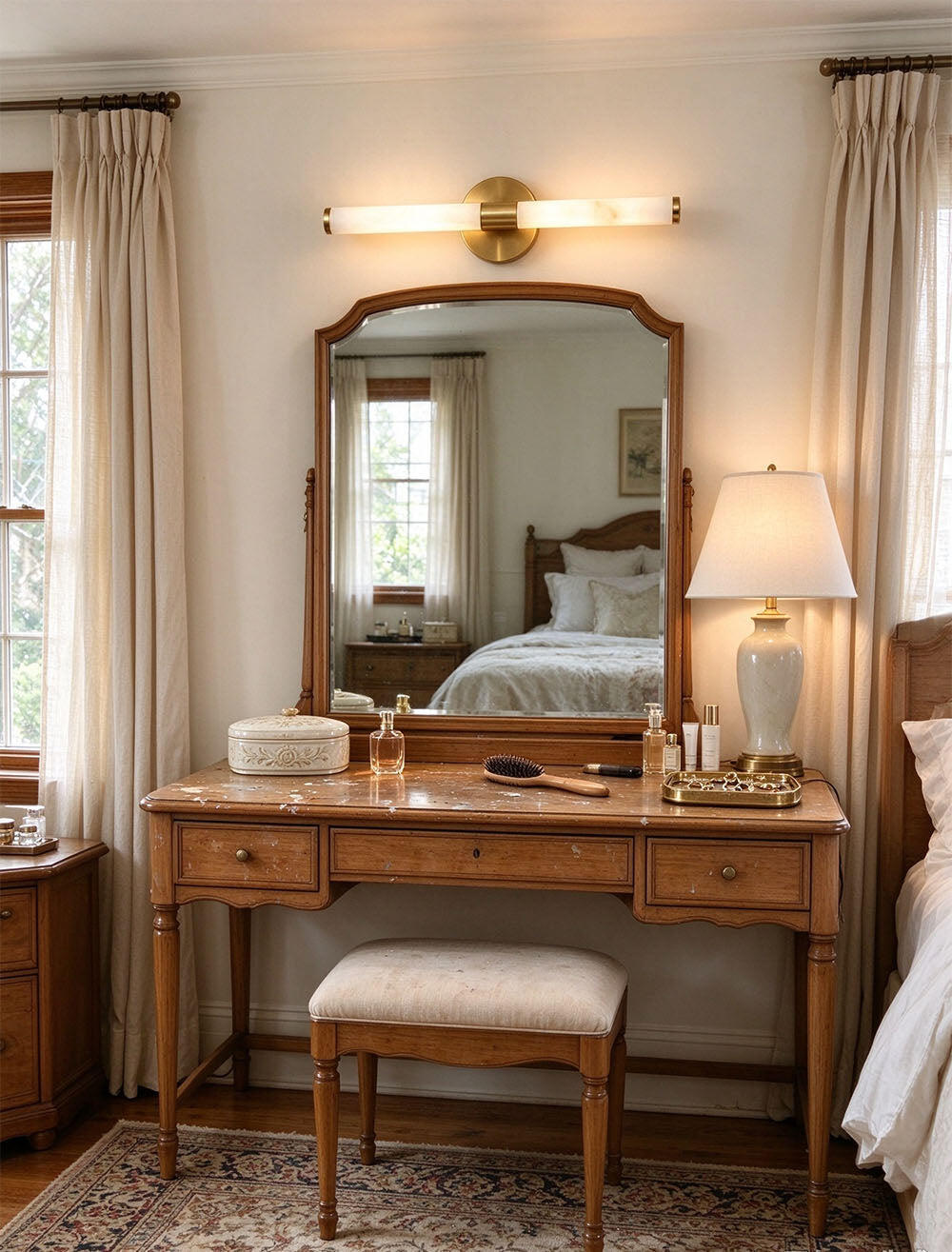
Four weeks later we sent a draft invoice for a five-fixture custom package: an Loop Hanging Light, two Alabaster round pendants, eleven Tiered Wall Lights in two sizes, and six pill-form sconces. What came back was our own invoice, printed on paper, annotated in pencil in the margins:
- “Please give me the 15% discount” , with her own line-by-line derivation of what each item should cost after it.
- “This size will be 142cm x 78cm x 35cm, correct? The size listed here is wrong.” , she was right; a variant label had the wrong dimensions.
- “Can you do this in 14.5 inches, not 15.7 inches?” , next to the sconces. We could.
- Next to a $4,230 shipping line: “Is this the shipping cost? Isn't it free?”
- And boxed at the bottom, her verdict: “Total should be $17,083.”
Our draft said $18,907.80. The order that actually went through was $17,510, a number that sits a great deal closer to her arithmetic than to ours. We consider that a feature of this business, not an embarrassment: a client who can audit you is a client who can trust you, because she never has to wonder what the numbers are hiding.

Act III: drawings, and a seven-point reply
Custom work here starts with CAD sheets, not deposits: wall-panel dimensions, unfolded belt diagrams for the leather, LED specs, driver and dimmer notes. We sent a full set for her approval before production. Her reply ran to sixteen attachments, tape-measure photos, close-ups of a leather sample between two fingers, our drawings marked up by hand, one video, and a numbered list that we have kept as a small manual of what exacting clients care about:
- The alabaster must show brown veining, not pure white, confirmed twice.
- The sample bulb flickered at low brightness. If bulbs flicker, “I cannot install them, only return them. Please watch the video.”
- Size confirmations, again, in writing.
- The leather straps in 3/16 by 5/16 inch, with a raw, unfinished edge, “don't enlarge it like the sample.”
- “Check every part carefully before shipping, to avoid any mistakes.”
- Hanging height to follow in two days, and could it be adjustable on site?
- Lengthen the wall-lamp wires, the wire on an earlier fixture was poor and the lamp sat crooked against the wall.
Point 7 stings, and belongs in this article precisely because it does. We shipped a wire that wasn't good enough, a wall lamp hung crooked in a house in Connecticut, and a client had to tell us. The wire spec changed. The flicker complaint sent us hunting for a better G9 source that dims to nothing without strobing, which is now what we reach for first. A demanding client is unpaid quality control, if the factory is listening.

Act IV: the commissions we never advertised
Somewhere around the second year, the requests started leaving our catalog. A link would arrive, a mirror-finish piece, not a light, not ours, with the question: can you make this? Because there is a workshop behind this store rather than a warehouse, the honest answer was yes. We asked for color and size preferences, built it, and sent photos from the floor before it shipped. None of this appears on our site as a service. It exists because at some point “do you sell this?” quietly became “can you make this?” , which is a different question, asked only of people you trust.

What the ledger says trust is
It is tempting to end with something warm about relationships. The ledger is more precise. Trust, operationally, looked like this:
- Drawings before production, every time. Nothing custom went to the workshop without her signature on a CAD sheet.
- Her math was allowed to win. When her pencil said $17,083 and our system said $18,907.80, the final invoice moved toward the pencil.
- Complaints changed the product. Longer wires, a different G9 bulb, veining confirmed before cutting stone. Twice.
- The imperfections stayed on the books. One order was partially refunded. One $10,900 quote from this June is still sitting unpaid, and may stay that way. Ten orders in, we don't pretend the account is frictionless; it is durable, which is better.
Twenty-eight months after a $720 audition, the pencil is still writing. We intend to keep earning the marginalia.
The questions this account answers
Do you make custom sizes of your fixtures?
Yes. In the account described here, sconces were resized from 15.7 to 14.5 inches and leather straps cut to 3/16 by 5/16 inch on request. Custom dimensions are confirmed on CAD drawings before production begins.
Do you provide drawings before producing a custom order?
Always. Every custom piece starts with CAD sheets covering dimensions, materials, LED and driver specs, and mounting, and production starts only after the client approves them in writing.
Can hanging height be adjusted during installation?
On cable- and cord-hung fixtures, yes, within the range stated on the drawing. When a client needs on-site adjustability, we specify it before production, as happened in this account.
What if a bulb flickers at low brightness?
We treat it as a defect. A flicker complaint in this account led us to change our default dimmable G9 source to one that dims smoothly to low levels, and dimming behavior is now checked before shipping.
Can you build something that isn't in your catalog?
Sometimes, yes. Because our fixtures come from our own workshop, long-standing clients have commissioned pieces outside the catalog, agreed case by case with drawings and photos before shipping.
What 1,002 Orders Taught Us About Buying a Chandelier
French Country vs. Parisian Chic: How to Choose the Right Chandelier for Every Room。
Related Posts

Cherubs, Crystal and Candlelight: Four Fixtures for a Beautifully Haunted House

The 8-Foot Ceiling Problem: How to Get a Real Chandelier Without Losing Headroom

French Country vs. Parisian Chic: How to Choose the Right Chandelier for Every Room。

What 1,002 Orders Taught Us About Buying a Chandelier

Below Half Power: Bulbs, Dimmers and the Glow You Paid For

Three Dim Layers: Composing a Bedroom in Light