Faceted, Textured or Solid: Reading a Clear Shade Up Close
Material Guide
Three ways a transparent shade can handle the same bulb Samulighting bulb
A frosted shade hides the bulb. A clear one doesn't — it takes the light and does something with it. What that something is depends entirely on how the surface is worked.

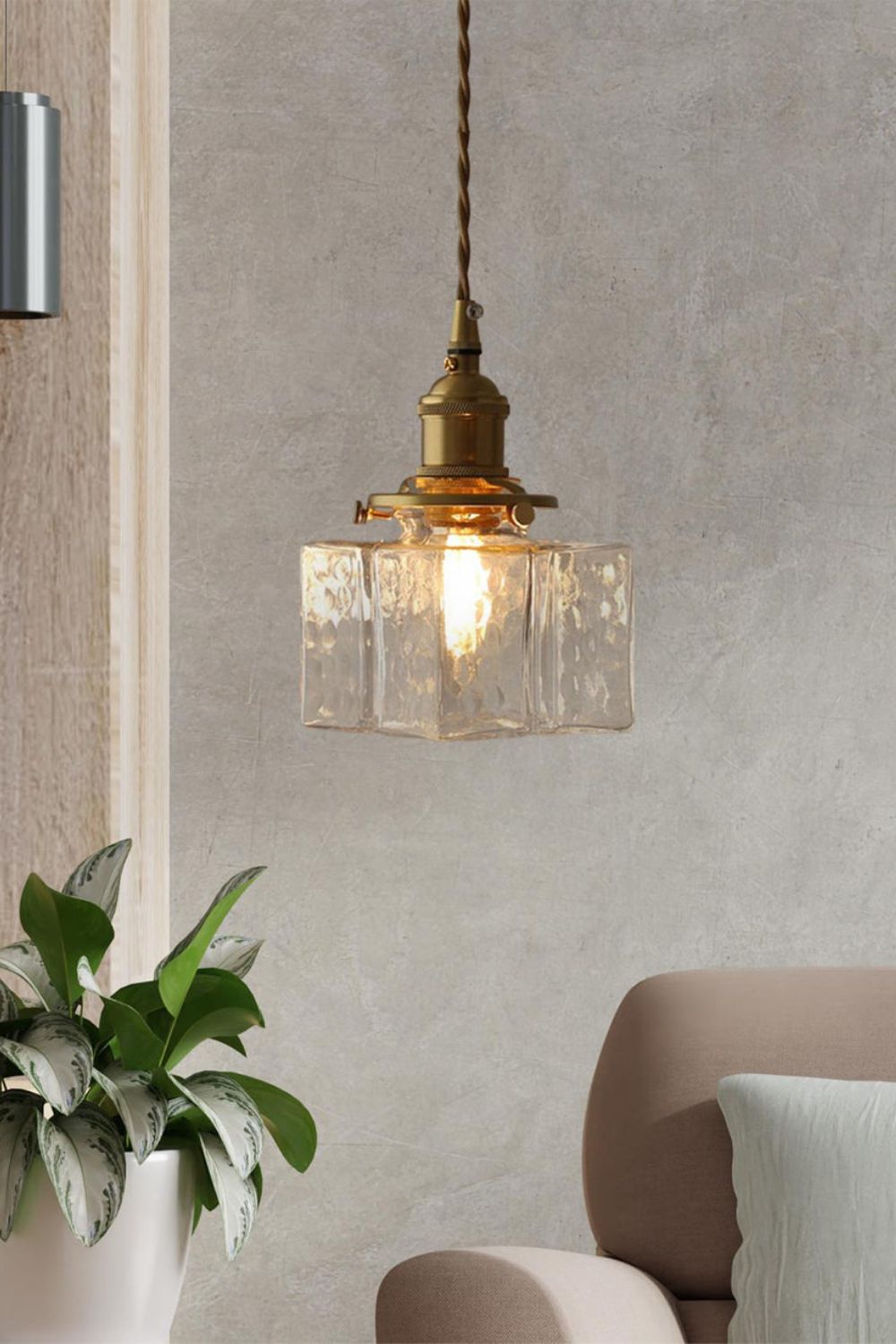
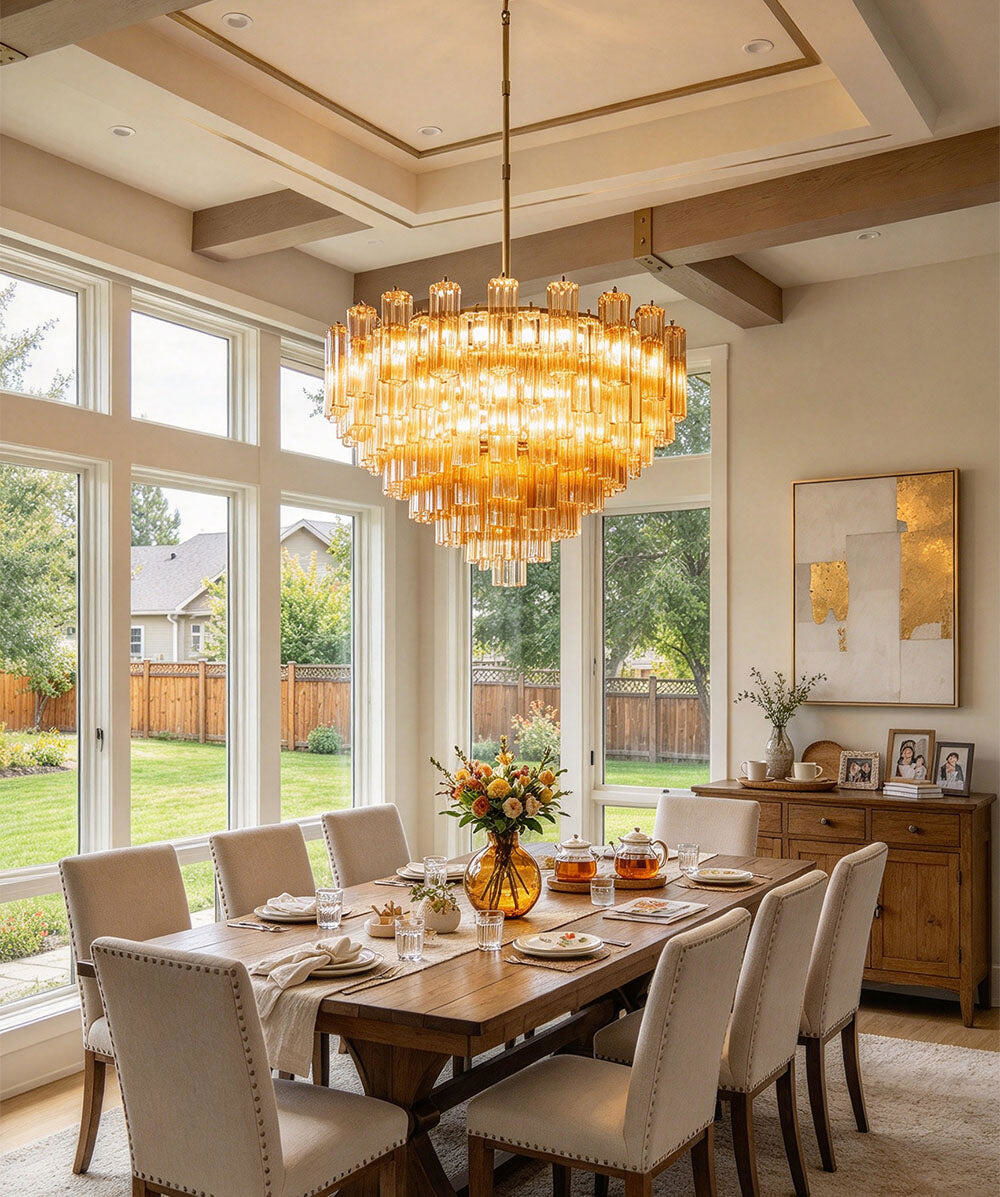
Hold two clear shades side by side and they look like the same idea. Switch them on and they behave nothing alike. One breaks the light into a hundred small glints across the wall. One holds it inside the material as a slow, thick glow. One carries it along an edge as a single bright line.
All three are transparent. All three sit on brass. The difference is the surface — and it is the surface you are actually choosing between.
A clear shade doesn't soften light. It redirects it — and the surface decides where it goes.


✦ Before you choose
Check the sightline
Clear shades show the source. Where a seated eye looks straight at the fixture — a low sconce beside a sofa — choose an integrated LED or a textured surface over an exposed bulb.
Warm white, always
Cool white turns clear glass and crystal slightly blue and flattens brass to grey. 3000K keeps the metal warm and the glass reading gold rather than clinical.
Texture hides dust
Faceted and sculpted surfaces stay looking clean far longer than a smooth clear panel, which shows every fingerprint. Worth knowing for a kitchen or an entryway.
? Questions, answered
What is the actual difference between glass and K9 crystal?
K9 is a specific optical grade with higher clarity and a higher refractive index than standard glass, which is why a cut K9 prism throws sharper, brighter points of light. Pressed and sculpted glass shapes light through its surface instead; neither is better, they simply do different jobs.
Will a clear shade be too bright?
Clear shades pass more light than frosted ones, so the fixture reads brighter for the same bulb. Lower the wattage rather than the colour temperature, and prefer an integrated LED or a textured surface anywhere the source sits at eye level.
Can I mix faceted and solid pieces in one room?
Yes, provided the metal matches. Keep every fixture on the same brass tone and let the glass vary — a solid bar beside a bed and a cascade of prisms overhead read as one scheme when the metal ties them together.
How do I clean them?
A dry microfibre cloth for the glass and crystal, and the same cloth alone on the brass — no polish or metal cleaner, which strips the finish. A soft dry brush reaches into faceted recesses.
Glass & Crystal Lighting
Find the surface that suits your room
Faceted, sculpted and solid pieces across sconces, table lamps and chandeliers — all on the same warm brass.
The Prism Effect: Inside the Cassian Chandelier
No Shades, All Flame: How to Choose Bulbs for a Candelabra Chandelier
Related Posts

The 8-Foot Ceiling Problem: How to Get a Real Chandelier Without Losing Headroom

French Country vs. Parisian Chic: How to Choose the Right Chandelier for Every Room。

The Client Who Writes Back in Pencil

What 1,002 Orders Taught Us About Buying a Chandelier

Below Half Power: Bulbs, Dimmers and the Glow You Paid For

Three Dim Layers: Composing a Bedroom in Light

The First Sentence: Statement Lighting for Entryways